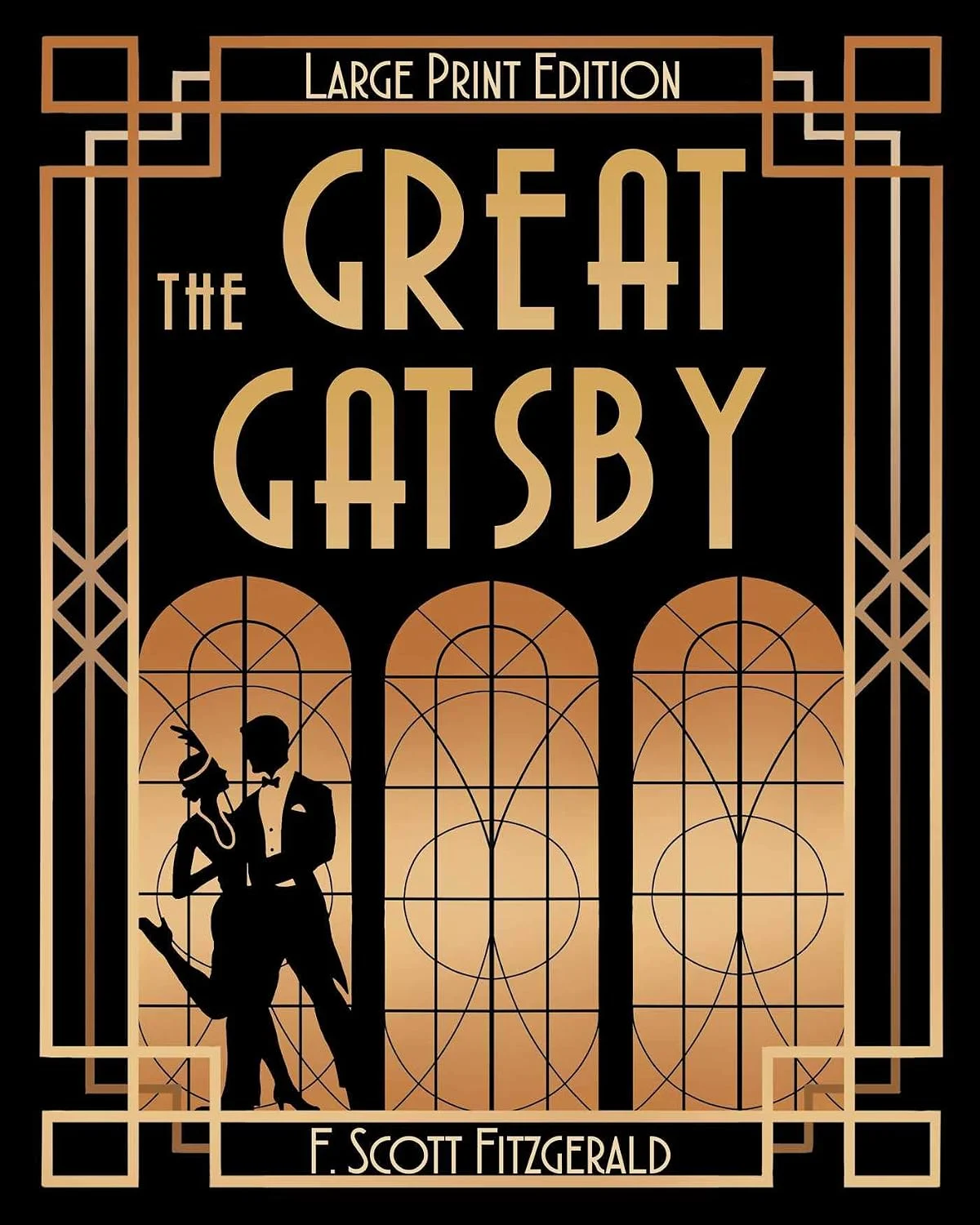

Great Gatsby (LARGE PRINT) book cover by F. Scott Fitzgerald
Amazon customers: 4.5 out of 5 · 5,858 ratings

Great Gatsby (LARGE PRINT)

By F. Scott Fitzgerald
Children • City Life Fiction • 20th Century Historical Romance • American Historical Romance
F. Scott Fitzgerald Fiction

This authorized edition presents F. Scott Fitzgerald’s third book with his final revisions, a foreword by his granddaughter, and a new introduction by Jesmyn Ward. It preserves the author’s text as he prepared it and situates the novel for contemporary readers.

The story follows the mysteriously wealthy Jay Gatsby and his love for the beautiful Daisy Buchanan, set against lavish parties on Long Island in the 1920s. It portrays America in that decade when The New York Times noted "gin was the national drink and sex the national obsession," and frames Gatsby’s longing and the era’s excesses without revealing their outcomes.

Mysteriously wealthy Jay Gatsby pursues his love for Daisy Buchanan while hosting lavish Long Island parties amid 1920s excess.

Retailer links open in a new tab. As an Amazon Associate I earn from qualifying purchases.

bks.social Reader Actions
👁 Before You Read ✉ Join Reader List
Where to get this book

Pick a format, then choose a retailer. The main button points to the preferred option for the selected format.

Edition information

Book details

View details for:
Publisher
Scribner
Publication date
September 30, 2004
Print length
180 pages
Language
English
ISBN
978-0743273565

Join the Reader List

Join bks.social’s reader list for book recommendations, reader updates, featured titles, and occasional community news. No noise. Just the important things.

G-NRIS™ Story Intelligence

Why readers connect with Great Gatsby (LARGE PRINT)

A concise view of the book’s strongest literary signals and the reading interests shared by people connected to it on bks.social.

Editorial perspective

Gatsby’s Longing Amid the Extravagance of 1920s Long Island

Mysteriously wealthy Jay Gatsby loves Daisy Buchanan, and his longing anchors F. Scott Fitzgerald’s novel. Around that intimate concern stretches a world of lavish Long Island parties and the excesses of 1920s America.

What makes this book compelling?

The contrast between Gatsby’s personal longing and the surrounding displays of wealth gives the story its emotional focus: private desire set against public extravagance. This large-print edition preserves Fitzgerald’s final revisions and includes a foreword by his granddaughter and an introduction by Jesmyn Ward, offering context for approaching the novel today.

Who might enjoy this book?

Consider this edition if you enjoy literary fiction about romantic longing, wealth, and American society in the 1920s. It also suits those seeking the novel in large print with introductory material.
Reader connection

Readers connected to this book most often reflect Psychological Moral Explorer reader archetypes. Their strongest shared genre interests include Historical Fiction, Psychological Thriller, Literary Fiction, and Noir. They are commonly drawn to themes such as Poverty, Success, Breakthrough Work, and Perseverance.

About the author

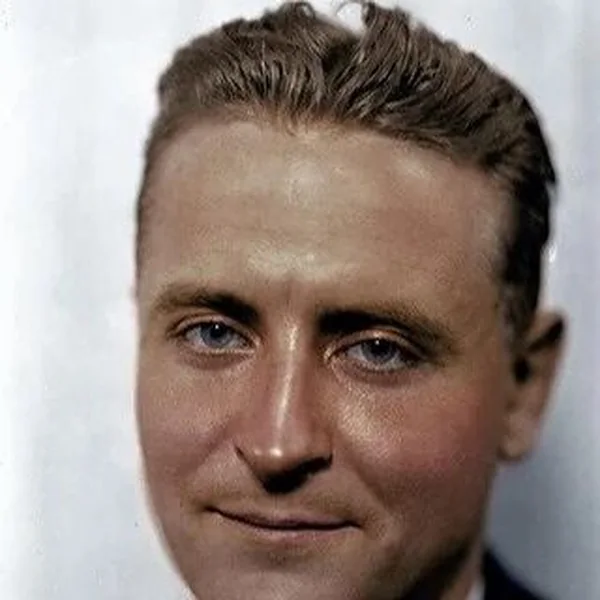
F. Scott Fitzgerald

F. Scott Fitzgerald

F. Scott Fitzgerald (1896–1940) was an American novelist and short story writer, widely regarded as one of the greatest voices of the Jazz Age. Born in St. Paul, Minnesota, he attended Princeton University but left before graduating to join the Army during World War I. His first novel, This Side of Paradise (1920), brought him instant fame and established him as the chronicler of a new, modern generation.

Fitzgerald and his wife Zelda became icons of the 1920s, embodying both the glamour and recklessness of the era. Fitzgerald wrote his most celebrated work, The Great Gatsby (1925), while living in France.

The novel, set in Long Island during the Roaring Twenties, explored themes of wealth, desire, illusion, and the corruption of the American Dream. Initially, the book received modest sales and mixed reviews. Disheartened, he continued to struggle financially, writing short stories for magazines to support his family. In later years, Fitzgerald worked in Hollywood as a screenwriter. He died in 1940, believing himself a failure, but The Great Gatsby has since become a cornerstone of American literature and is now recognized as his masterpiece.

Join the book lovers community

Continue the conversation in the Book Hub for Great Gatsby (LARGE PRINT)

Visit bks.social’s Book Hub for reader discussions, reviews, posts, quotes, questions, reading activity, related books, and G-NRIS story intelligence.