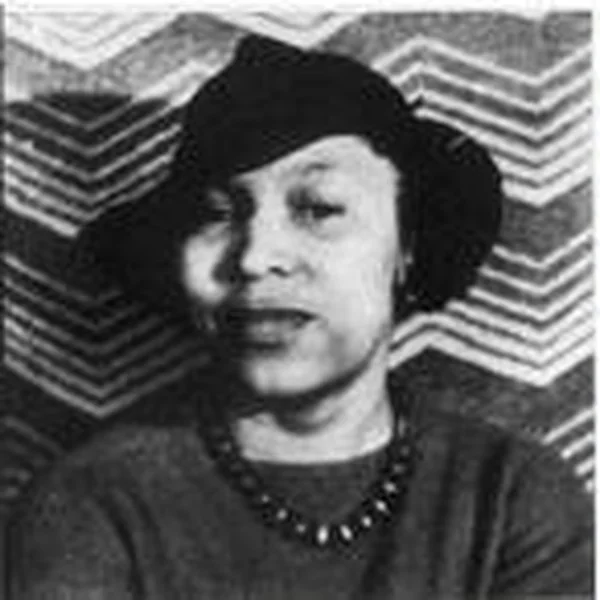
Their Eyes Were Watching God book cover by Zora Neale Hurston, Mary Helen Washington, Henry Louis Gates Jr.
Amazon customers: 4.6 out of 5 · 17,713 ratings

Their Eyes Were Watching God

By Zora Neale Hurston, Mary Helen Washington, Henry Louis Gates Jr.
Adult • Science Fiction & Fantasy • Fantasy • Epic
Zora Neale Hurston, Mary Helen Washington, Henry Louis Gates Jr. Fiction

Their Eyes Were Watching God by Zora Neale Hurston tells a Southern love story centered on a strong Black female protagonist. The novel portrays her pursuit of love and the social pressures she faces in a Southern setting, rendering both wit and pathos through Hurston’s voice.

The book’s initial audiences rejected its central heroine, and the novel went out of print for almost thirty years before a 1978 reissue. Since that reissue the work has been widely read and has become a major title in the canon of African-American literature, noted for its vivid depiction of relationships and community life in the South.

A strong Black female protagonist in the rural South pursues love and selfhood while facing social rejection and community pressures that test her resolve.

Retailer links open in a new tab. As an Amazon Associate I earn from qualifying purchases.

bks.social Reader Actions
👁 Before You Read ✉ Join Reader List
Where to get this book

Pick a format, then choose a retailer. The main button points to the preferred option for the selected format.

Edition information

Book details

View details for:
Publisher
Amistad
Publication date
January 3, 2006
Print length
219 pages
Language
English
ISBN
978-0060838676

Join the Reader List

Join bks.social’s reader list for book recommendations, reader updates, featured titles, and occasional community news. No noise. Just the important things.

G-NRIS™ Story Intelligence

Why readers connect with Their Eyes Were Watching God

A concise view of the book’s strongest literary signals and the reading interests shared by people connected to it on bks.social.

Editorial perspective

A Black Woman’s Pursuit of Love Amid Southern Social Pressures

Zora Neale Hurston’s Their Eyes Were Watching God centers on a strong Black woman seeking love in the South. Her desires encounter social pressures in a story where relationships and community life are closely intertwined.

What makes this book compelling?

Hurston brings both wit and pathos to the tensions between personal longing and social expectations. Her vivid portrayal of Southern community life gives the love story a broader social texture, with the heroine’s perspective at its center.

Who might enjoy this book?

This novel is a strong choice for readers drawn to character-centered literary fiction about love and the pressures surrounding it. It also belongs on the list for anyone exploring African-American literature and portrayals of Southern community life.

Reader connection

Readers connected to this book most often reflect Psychological Moral Explorer reader archetypes. Their strongest shared genre interests include Historical Fiction, Psychological Thriller, Literary Fiction, and Noir. They are commonly drawn to themes such as Poverty, Success, Breakthrough Work, and Perseverance.

About the author

Zora Neale Hurston, Mary Helen Washington, Henry Louis Gates Jr.

Zora Neale Hurston, Mary Helen Washington, Henry Louis Gates Jr.

Zora Neale Hurston was born on Jan. 7, 1891, in Notasulga, Alabama. Hurston moved with her family to Eatonville, Florida, when she was still a toddler. Her writings reveal no recollection of her Alabama beginnings. For Hurston, Eatonville was always home.

Growing up in Eatonville, in an eight-room house on five acres of land, Zora had a relatively happy childhood, despite frequent clashes with her preacher-father. Her mother, on the other hand, urged young Zora and her seven siblings to "jump at de sun."

Hurston's idyllic childhood came to an abrupt end, though, when her mother died in 1904. Zora was only 13 years old.

After Lucy Hurston's death, Zora's father remarried quickly and seemed to have little time or money for his children. Zora worked a series of menial jobs over the ensuing years, struggled to finish her schooling, and eventually joined a Gilbert & Sullivan traveling troupe as a maid to the lead singer.

In 1917, she turned up in Baltimore; by then, she was 26 years old and still hadn't finished high school. Needing to present herself as a teenager to qualify for free public schooling, she lopped 10 years off her life--giving her age as 16 and the year of her birth as 1901.

Once gone, those years were never restored: From that moment forward, Hurston would always present herself as at least 10 years younger than she actually was. Zora also had a fiery intellect, and an infectious sense of humor. Zora used these talents--and dozens more--to elbow her way into the Harlem Renaissance of the 1920s, befriending such luminaries as poet Langston Hughes and popular singer/actress Ethel Waters. By 1935, Hurston--who'd graduated from Barnard College in 1928--had published several short stories and articles, as well as a novel (Jonah's Gourd Vine) and a well-received collection of black Southern folklore (Mules and Men).

But the late 1930s and early '40s marked the real zenith of her career. She published her masterwork, Their Eyes Were Watching God, in 1937; Tell My Horse, her study of Caribbean Voodoo practices, in 1938; and another masterful novel, Moses, Man of the Mountain, in 1939. When her autobiography, Dust Tracks on a Road, was published in 1942, Hurston finally received the well-earned acclaim that had long eluded her. That year, she was profiled in Who's Who in America, Current Biography and Twentieth Century Authors. She went on to publish another novel, Seraph on the Suwanee, in 1948.

Still, Hurston never received the financial rewards she deserved. So when she died on Jan. 28, 1960--at age 69, after suffering a stroke--her neighbors in Fort Pierce, Florida, had to take up a collection for her funeral. The collection didn't yield enough to pay for a headstone, however, so Hurston was buried in a grave that remained unmarked until 1973.

That summer, a young writer named Alice Walker traveled to Fort Pierce to place a marker on the grave of the author who had so inspired her own work. Walker entered the snake-infested cemetery where Hurston's remains had been laid to rest.

Wading through waist-high weeds, she soon stumbled upon a sunken rectangular patch of ground that she determined to be Hurston's grave. Walker chose a plain gray headstone. Borrowing from a Jean Toomer poem, she dressed the marker up with a fitting epitaph: "Zora Neale Hurston: A Genius of the South."

Join the book lovers community

Continue the conversation in the Book Hub for Their Eyes Were Watching God

Visit bks.social’s Book Hub for reader discussions, reviews, posts, quotes, questions, reading activity, related books, and G-NRIS story intelligence.