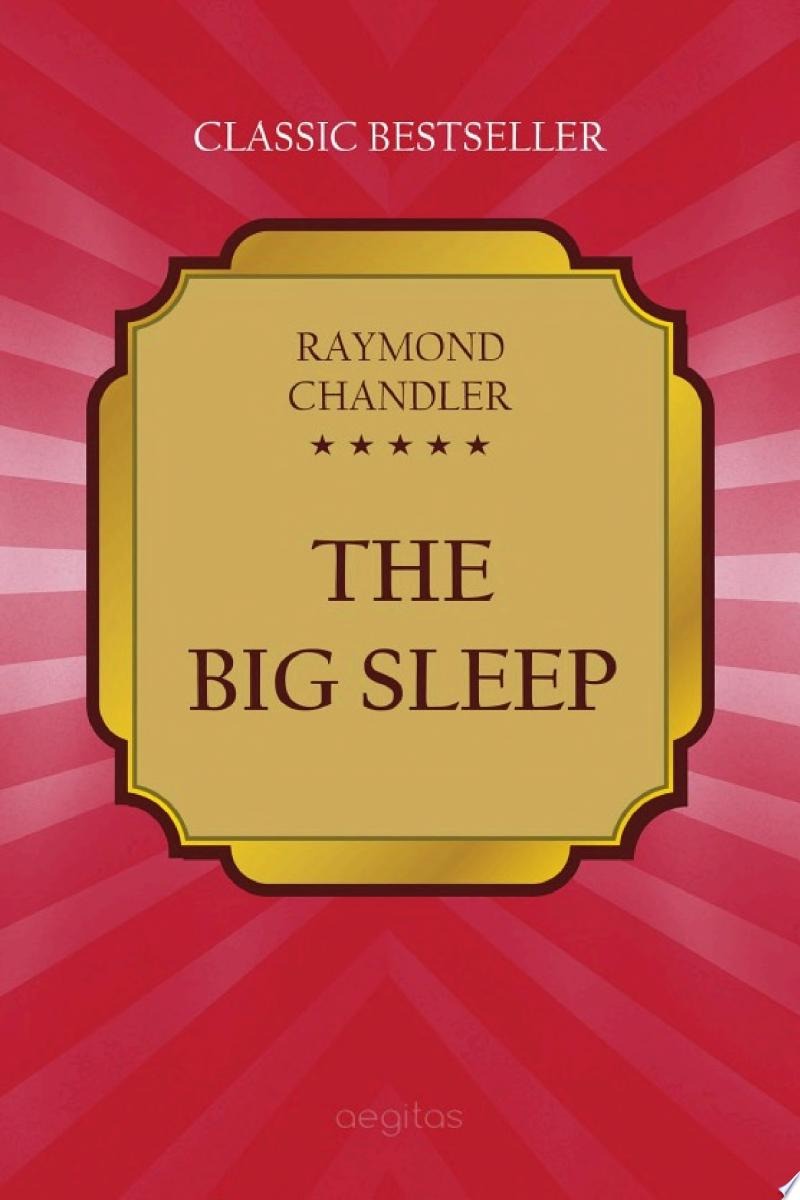
The Big Sleep book cover by Raymond Chandler

The Big Sleep

Adult • Mystery • Thriller & Suspense • Noir • Thriller
Private investigator in 1930s Los Angeles Central conflict with wealthy clients Marlowe's moral code is tested Cynical outlook on human nature Clashes with corrupt police

Philip Marlowe, a private investigator who embodies the classic, cynical archetype of the hardboiled detective. Operating in a gritty, corrupt 1930s Los Angeles, Marlowe is a solitary man in his late thirties, possessing a sharp wit, a cynical outlook on human nature, and a deeply ingrained, personal code of honor.

Though he works for a modest fee and frequently clashes with both wealthy clients and corrupt police officers, he remains fiercely independent and uncorruptible. He is a well-educated, chess-playing realist who uses a tough, wisecracking exterior to protect a hidden core of idealism and moral integrity in a world devoid of it.

Choose a book format
Paperback prices by retailer

Pick a format, then compare retailer prices. The main button points to the preferred option for the selected format.

Edition information

Book details

Publisher
Vintage Crime/Black Lizard
Publication date
1988
Print length
231 pages
Language
English
ISBN
978-0394758282

Mystery + Thriller & Suspense + Noir

Reader guide

What to Know Before Reading The Big Sleep

The Big Sleep (1939) is a hardboiled crime novel by Raymond Chandler, the first to feature the detective Philip Marlowe. It has been adapted for film twice, in 1946 and again in 1978. The story is set in Los Angeles

The story is noted for its complexity, with characters double-crossing one another and secrets being exposed throughout the narrative. The title is a euphemism for death; the final pages of the book refer to a rumination about "sleeping the big sleep".

Join the Reader List

Join bks.social’s reader list for book recommendations, reader updates, featured titles, and occasional community news. No noise. Just the important things.

About the author
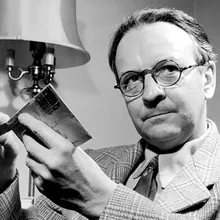
Raymond Chandler

Raymond Chandler

Raymond Thornton Chandler (July 23, 1888 – March 26, 1959) was a British-American novelist and screenwriter. In 1932, at age forty-four, Chandler decided to become a detective fiction writer after losing his job as an oil company executive during the Great Depression. His first short story, "Blackmailers Don't Shoot", was published in 1933 in Black Mask, a popular pulp magazine. His first novel, The Big Sleep, was published in 1939. In addition to his short stories, Chandler published seven novels during his lifetime (an eighth, in progress at the time of his death, was completed by Robert B. Parker). All but Playback have been made into motion pictures, some several times. In the year before he died, he was elected president of the Mystery Writers of America. He died on March 26, 1959, in La Jolla, California. Chandler had an immense stylistic influence on American popular literature. He is considered by many to be a founder, along with Dashiell Hammett, James M. Cain and other Black Mask writers, of the hard-boiled school of detective fiction. His protagonist, Philip Marlowe, along with Hammett's Sam Spade, is considered by some to be synonymous with "private detective," both having been played on screen by Humphrey Bogart, whom many considered to be the quintessential Marlowe. Some of Chandler's novels are considered important literary works, and three are often considered masterpieces: Farewell, My Lovely (1940), The Little Sister (1949), and The Long Goodbye (1953). The Long Goodbye was praised in an anthology of American crime stories as "arguably the first book since Hammett's The Glass Key, published more than twenty years earlier, to qualify as a serious and significant mainstream novel that just happened to possess elements of mystery".
A favorite quote

“It was a nice, quiet little place, and I had a good time there.”

Join the book lovers community

Continue the conversation in the Book Hub for The Big Sleep

Visit bks.social’s Book Hub for reader discussions, reviews, posts, quotes, questions, reading activity, related books, and G-NRIS story intelligence.