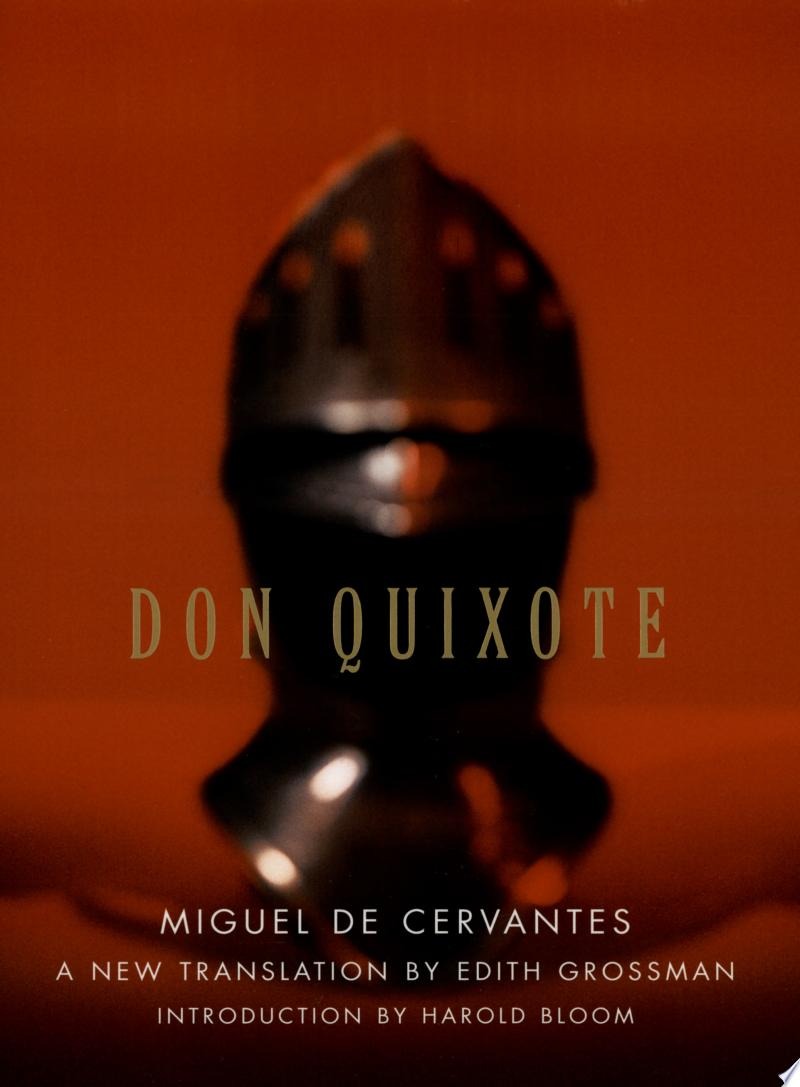
Don Quixote — Reprint book cover by Miguel de Cervantes, Edith Grossman

Don Quixote

Adult • Historical Fiction
Reprint
Aging nobleman renames himself Obsessed with medieval romances Travels with his frail horse Rocinante Embarks on whimsical knightly quests Faces challenges across Spain

Don Quixote, originally named Alonso Quijano, is an aging, low-ranking Spanish nobleman whose life changes forever when an obsession with medieval romance novels completely warps his mind. He is characterized by a tragic yet noble delusion, believing that he has a divine duty to resurrect the forgotten tradition of knighthood. Despite his gaunt appearance, rusty armor, and frail horse Rocinante, he possesses an iron will and absolute conviction in his own destiny, renaming himself to fit the grand persona of a chivalric hero.

Choose a book format
Paperback prices by retailer

Pick a format, then compare retailer prices. The main button points to the preferred option for the selected format.

Edition information

Book details

Publisher
Ecco
Publication date
2005
Print length
992 pages
Language
English
ISBN
9780060934347

Historical Fiction

Reader guide

What to Know Before Reading Don Quixote

Edith Grossman's acclaimed translation of Miguel de Cervantes' 'Don Quixote' offers a fresh perspective on this timeless classic. Chronicling the misadventures of the noble knight-errant and his loyal squire, Sancho Panza, the novel captures the spirit of 16th-century Spain with humor and tragedy. Grossman's translation is celebrated for its eloquence and depth, bringing Cervantes' characters to life with remarkable clarity.

Join the Reader List

Join bks.social’s reader list for book recommendations, reader updates, featured titles, and occasional community news. No noise. Just the important things.

About the author
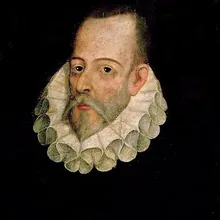
Miguel de Cervantes, Edith Grossman

Miguel de Cervantes, Edith Grossman

Miguel de Cervantes Saavedra (Alcalá de Henares, September 29, 1547 – Madrid, April 22, 1616) was a Spanish soldier, novelist, poet, and playwright. He is considered the greatest figure in Spanish literature and is universally known for writing Don Quixote de la Mancha, which many critics have described as the first modern novel and one of the finest works in world literature. Furthermore, it is the most edited and translated book in history, surpassed only by the Bible, earning him the nickname "Prince of Wits." Cervantes is highly original. By parodying a genre that was beginning to decline, such as the chivalric romance novels, he created a highly vibrant new genre: the polyphonic novel. In this form, differing worldviews and points of view overlap until they blend in a level of complexity that mirrors reality itself, even utilizing meta-fictional elements. During this era, epic stories could also be written in prose, and with Lope de Vega's precedent in theater showing little respect for classical models, it fell to Cervantes to forge the formula for narrative realism. This realism had already been foreshadowed in Spain by an entire literary tradition dating back to the Cantar de Mío Cid, and Cervantes offered it to Europe, where he gained more disciples than in Spain itself. The entire realist novel movement of the 19th century is marked by his mastery. On the other hand, another great masterpiece by Cervantes, the Exemplary Novels, demonstrates the broad scope of his mind and his desire to experiment with narrative structures. In this collection of short stories, the author experiments with the Byzantine novel (The English Spanish Lady), the detective or crime novel (The Force of Blood, The Jealous Extremaduran), Lucianesque dialogue (The Dog's Colloquy), a miscellany of witty sayings and aphorisms (The Glass Licentiate), the picaresca novel (Rinconete and Cortadillo), and narratives built around a sudden recognition or anagnorisis (The Gypsy Girl), among others. As a tribute and token of recognition, Editorial Alvi Books dedicated this space on Amazon to him in 2016.
A favorite quote

“The truth may be stretched, but cannot be broken, and always surfaces above lies, as oil does above water.”

Join the book lovers community

Continue the conversation in the Book Hub for Don Quixote

Visit bks.social’s Book Hub for reader discussions, reviews, posts, quotes, questions, reading activity, related books, and G-NRIS story intelligence.