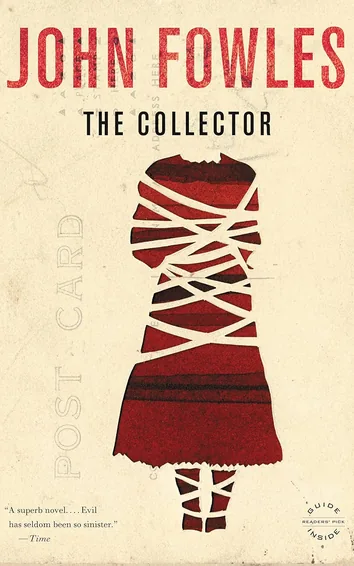

The Collector book cover by John Fowles

The Collector

Adult • Classics
Frederick collects butterflies and photos Central conflict of abduction unfolds Psychological struggle between captor and captive Power dynamics explored in confinement Alternating perspectives reveal character depths

Withdrawn, uneducated and unloved, Frederick collects butterflies and takes photographs. He is obsessed with a beautiful stranger, an art student whose presence becomes the focus of his private life. He watches her from a distance, building a fantasy around her that he carefully documents. His fixation and solitary routines reveal a man who confuses possession with affection and who lacks the social means to connect openly.

Unable to bridge the gulf between fantasy and reality, he abducts her and imprisons her in his house, intending to make her stay. The story charts their confinement and the ensuing psychological struggle, alternating perspectives that show both his rationalizations and her attempts to understand and survive. The novel examines questions of power, isolation, obsession and responsibility within a tense, claustrophobic drama without resolving readers' judgments.

Choose a book format
Paperback prices by retailer

Pick a format, then compare retailer prices. The main button points to the preferred option for the selected format.

Edition information

Book details

Publisher
Vintage Classics
Publication date
2004
Print length
288 pages
Language
English
ISBN
978-0099470472

Classics

Reader guide

What to Know Before Reading The Collector

Frederick Clegg, a socially isolated clerk who collects butterflies and photographs, becomes fixated on a young art student and abducts her, keeping her captive in his home. The novel follows their constrained lives through alternating viewpoints that reveal his attempts to rationalize ownership and her efforts to resist and understand her situation. The narrative probes questions of control, delusion and moral culpability while maintaining sustained tension around the captive relationship.

Join the Reader List

Join bks.social’s reader list for book recommendations, reader updates, featured titles, and occasional community news. No noise. Just the important things.

G-NRIS™ story intelligence

Why readers connect with The Collector

A concise view of the book’s strongest literary signals and the reading interests shared by people connected to it on bks.social.

Story profile

G-NRIS™ identifies The Collector primarily as Psychological Thriller, Fiction, and Drama. Its strongest themes include Obsession, Power and Control, Isolation, Survival, and Responsibility and Morality. Prominent narrative patterns include Captive and Captor, Obsession Gone Wrong, Alternating Perspectives, and Unreliable Narrator.
Reader connection

Readers connected to this book most often reflect Psychological Moral Explorer reader archetypes. Their strongest shared genre interests include Historical Fiction, Thriller, Self-Help, and Literary Fiction. They are commonly drawn to themes such as gaming, technology, Seeking Dark Psychological Tension, and Exploring The Fractured Self.

About the author

John Fowles

John Fowles

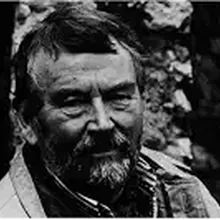
John Robert Fowles (; 31 March 1926 – 5 November 2005) was an English novelist, critically positioned between modernism and postmodernism. His work was influenced by Jean-Paul Sartre and Albert Camus, among others. After leaving Oxford University, Fowles taught English at a school on the Greek island of Spetses, a sojourn that inspired The Magus (1965), an instant best-seller that was directly in tune with 1960s "hippy" anarchism and experimental philosophy. This was followed by The French Lieutenant's Woman (1969), a Victorian-era romance with a postmodern twist that was set in Lyme Regis, Dorset, where Fowles lived for much of his life. Later fictional works include The Ebony Tower (1974), Daniel Martin (1977), Mantissa (1982), and A Maggot (1985).
Author information: Wikipedia

Join the book lovers community

Continue the conversation in the Book Hub for The Collector

Visit bks.social’s Book Hub for reader discussions, reviews, posts, quotes, questions, reading activity, related books, and G-NRIS story intelligence.